Wendy Günther · 22 September 2026
Unpacking the Influence of Real-Time Analytics on Habit Formation in Mobile Health Interfaces
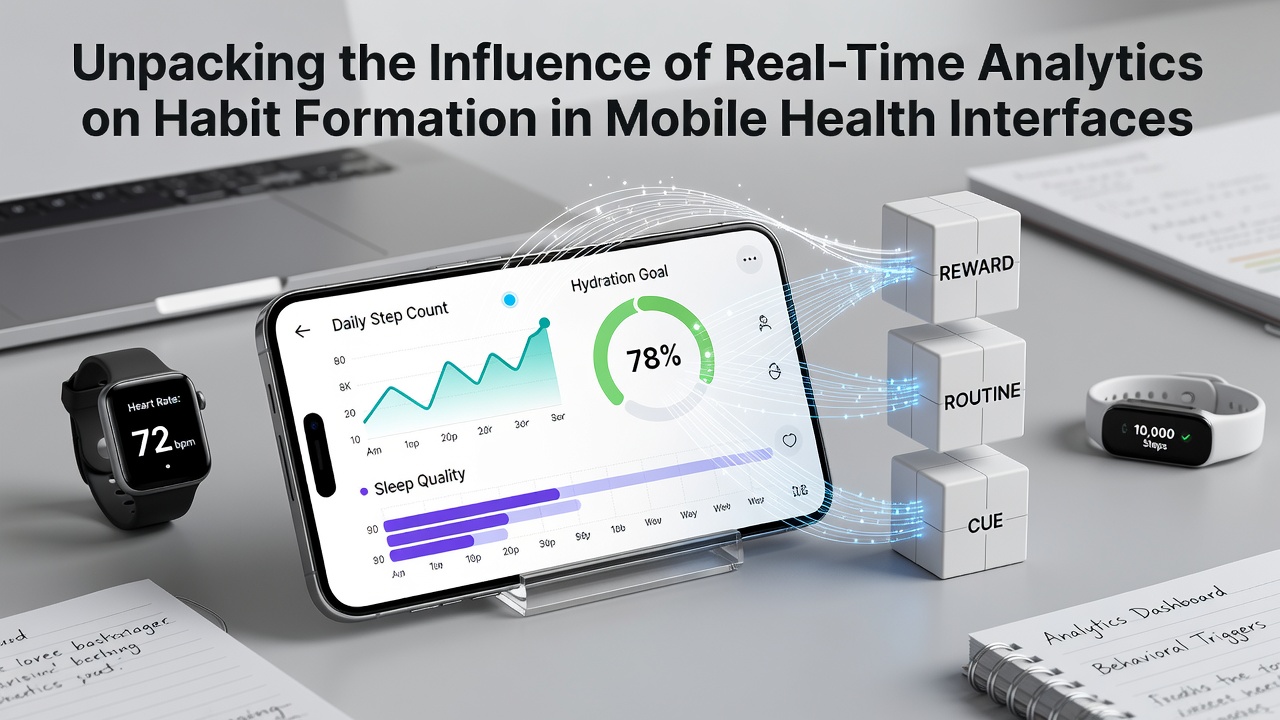
Real-time analytics in mobile health interfaces track user behaviors such as step counts, sleep patterns, and medication adherence through continuous data streams from sensors and self-reports, while these systems process information instantaneously to adjust feedback mechanisms that support habit loops involving cue detection, routine execution, and reward reinforcement. Researchers at institutions across multiple regions have documented how immediate visualizations of progress influence repetition rates, and data from large-scale app deployments shows that users receive tailored notifications based on deviations from established patterns which in turn correlate with higher consistency in daily activities. Studies indicate that when analytics platforms integrate machine learning models to predict lapses before they occur, they enable proactive interventions like personalized reminders that align with individual circadian rhythms and environmental triggers.
Mechanisms Driving Habit Reinforcement Through Live Data Processing
Applications leverage algorithms that segment user data into micro-intervals, often updating every few seconds or minutes, so that individuals see immediate cause-and-effect relationships between actions like completing a workout and subsequent metrics such as heart rate recovery or calorie expenditure. Observers note that this immediacy reduces the delay between behavior and outcome awareness which historically limited sustained engagement in analog tracking methods, and evidence from cohort analyses reveals increased adherence when interfaces display streak counters alongside comparative benchmarks drawn from anonymized peer groups. But here's the thing: the effectiveness hinges on balancing visibility of data with cognitive load, since overly frequent updates can lead to notification fatigue as documented in usability trials conducted by academic teams in North America and Europe.
Integration with wearable devices further amplifies these effects because heart rate variability, skin conductance, and movement data feed directly into habit formation pathways, allowing systems to identify optimal windows for activity prompts that maximize completion likelihood. Figures from ongoing monitoring programs reveal that users exposed to adaptive goal-setting features, where targets recalibrate based on recent performance trends, maintain longer sequences of consecutive days meeting objectives compared to static goal groups. What's interesting is how these platforms sometimes incorporate gamified elements such as virtual badges earned through sustained patterns, yet the core driver remains the analytical layer that quantifies incremental improvements and surfaces them in digestible formats like trend lines and heat maps.
Evidence from Deployments and Regional Data Trends
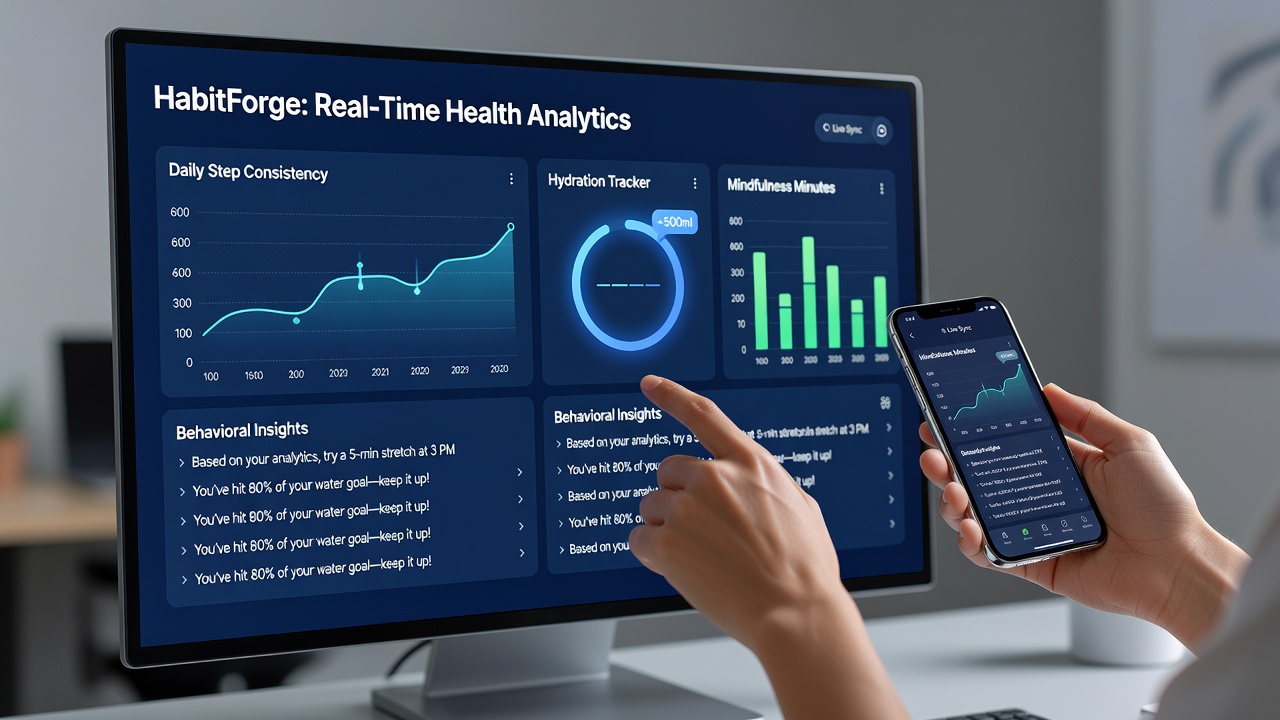
Analyses of millions of active sessions across popular interfaces demonstrate measurable shifts in behavior persistence when real-time feedback is present, with particular gains observed in domains like nutrition logging and mindfulness practice where users adjust intake or breathing exercises based on live summaries. Data released in September 2026 by health monitoring consortia highlights continued expansion of these features in both consumer and clinical settings, reflecting broader adoption driven by regulatory frameworks that emphasize outcome tracking in digital therapeutics. According to information available through the Centers for Disease Control and Prevention, population-level studies link consistent use of analytics-enabled apps to reductions in certain risk factors, although individual variability remains high depending on baseline motivation and socioeconomic access factors.
Another dimension involves privacy-preserving computation techniques that allow aggregate insights without exposing personal identifiers, which has encouraged wider participation in data-sharing initiatives that refine predictive models over time. Experts have observed that interfaces incorporating location-aware context, such as suggesting outdoor walks during favorable weather windows derived from integrated forecasts, achieve higher engagement metrics than purely schedule-based alternatives. Yet the same datasets show diminishing returns when feedback becomes predictable, prompting developers to introduce variability in presentation styles and reward structures to maintain novelty.
Challenges in Scaling and Measuring Long-Term Outcomes
Implementation hurdles include ensuring equitable access across devices with varying sensor accuracy and addressing disparities in digital literacy that affect interpretation of complex visualizations. Research indicates that populations in rural or lower-income areas exhibit different retention patterns when analytics rely heavily on continuous connectivity, prompting hybrid designs that cache data for later synchronization. A study coordinated through Australian health authorities further illustrates how cultural adaptations in feedback language and visual metaphors improve uptake among diverse demographic segments, expanding the reach of habit-support tools beyond initial user bases concentrated in urban centers.
Measurement of sustained habit formation requires longitudinal tracking beyond short-term app metrics, and organizations such as the World Health Organization have outlined evaluation frameworks that combine self-reported outcomes with objective sensor readings over multi-month periods. These approaches help distinguish transient novelty effects from enduring behavioral changes, while also accounting for external variables like seasonal influences or life events that disrupt routines.
Conclusion
Real-time analytics continue to shape habit formation within mobile health interfaces by delivering immediate, context-sensitive information that strengthens behavioral loops across diverse user populations. Ongoing refinements in predictive modeling, combined with attention to accessibility and privacy considerations, support broader application in preventive care and chronic condition management. Data trends through September 2026 and beyond underscore the role of these technologies in facilitating measurable consistency, provided designs prioritize clarity and minimize overload while adapting to individual and regional needs.